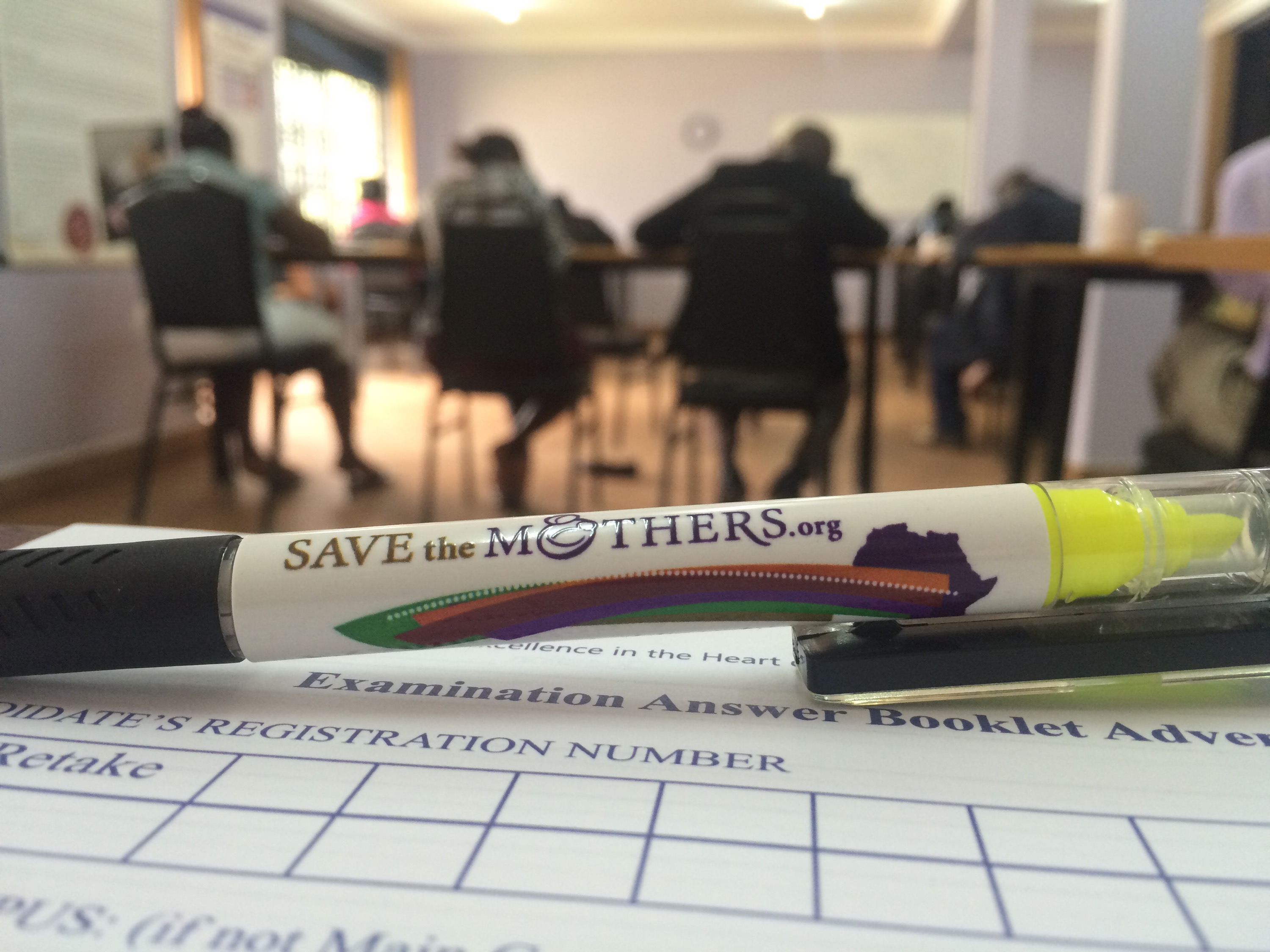
Invigilating exams today for the Master of Public Health Leadership program run by Save the Mothers.
Invigilating exams today for the Master of Public Health Leadership program run by Save the Mothers.
I took part in my first field trip yesterday. Well, my first field trip with Save the Mothers’ Master of Public Health Leadership (MPHL) class. I travelled with nine students to Budondo, a sub-county of Jinja District in Uganda. We visited Ivan, an alumnus of the MPHL program who has been working to implement safe motherhood programs in the area. This vision trip was meant to inspire current students, to help them see how their own education and passion may make an impact. It certainly challenged me.
Imagine being a pregnant woman in Uganda soon to give birth. You have the good fortune of arriving at the hospital when the single bed in the Labour Ward Room is free. The woman after you may have to give birth in the hallway, possibly even on the floor if no bed is available. It is nighttime and the health care facility has no electricity. Your midwife lights a lantern illuminating a portion of the room with a dull glow. There is also no running water in the building and the gathered supply is low. Your contractions grow closer together, your body writhing in pain. In her urgency to attend you, the midwife knocks over the lantern. The room is plunged into darkness. Your attendant’s vision now impaired, you give birth in the black of night.
This was the kind of picture painted by Ivan as he shared with us the struggles of promoting safe motherhood in Budondo. Many mothers have faced much worse. Until recently, four of six hospitals in the area were without power. But health care facilities in this sub-country of Jinja now have an advocate. Ivan lobbied the district government and Ministry of Health. In turn he received funding for solar powered lights and running water in area hospitals. These seemingly basic health care essentials are often not present. Now women in Budondo need not fear giving birth in darkness. This is just one area of maternal health in which Ivan and his team have worked for change.
Throughout our field trip, the MPHL students were attentive and interested. As those in this class approach the completion of their degree, students are now looking forward to applying their newly acquired skills. Hailing from Tanzania, South Sudan, Uganda and DRC, the potential breadth of their influence is wide. The challenges in East Africa are great. Many mothers and infants are needlessly dying during childbirth. That is why Save the Mothers is training professionals to make a positive impact in their communities. If those nine MPHL students are inspired to follow Ivan’s example, I think the future is bright.
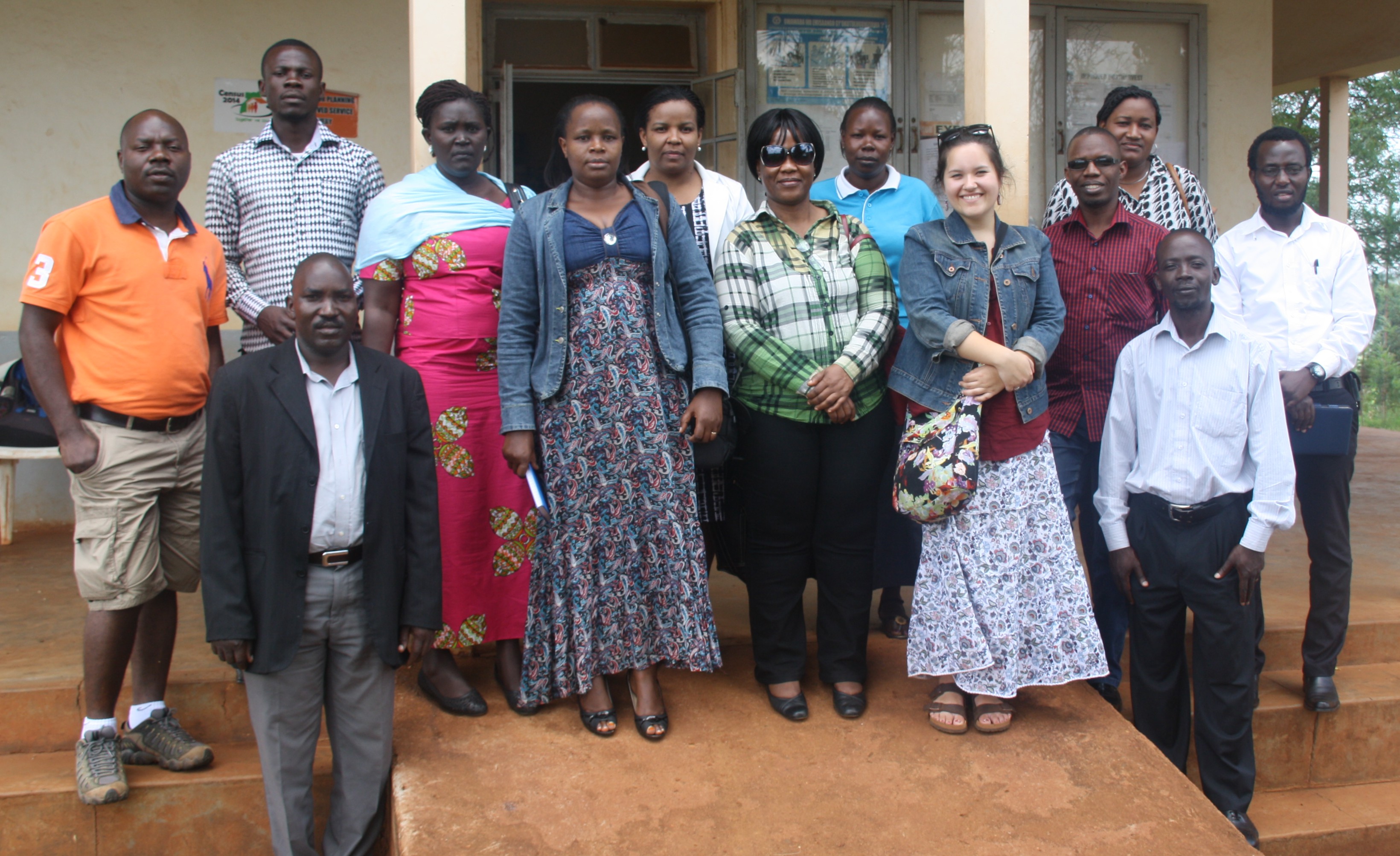
Me standing with the MPHL students as well as Ivan and his team. Ivan is the second man to my left standing on a lower step.
I am going to Uganda.
For a little over eight months I will be calling a university campus in East Africa “home.” I will be working with Save the Mothers, a Canadian charity, which runs a Master in Public Health Leadership (MPHL) program at Uganda Christian University.
The program is designed to equip working professionals from diverse backgrounds with the skills they need to promote infant and maternal health within their sphere of influence. It is saving the lives of mothers and their babies. Past students have included Members of Parliament, journalists, teachers, clergy and military personnel. They are now empowered with critical knowledge to create positive social change. As an intern, I will be working as an assistant to Dr. Jean Chamberlain Froese, the Executive Director of the program.
In Africa, pregnancy is one of the greatest threats to a woman’s life.
There are also high numbers of children who struggle through infancy and do not survive beyond the age of five. Last summer on a mission trip to Zambia, I encountered the painful reality of insufficient support for maternal and infant health. Dalton was one of the men employed by the grassroots organization my team was working with. The year before, his wife had given birth. Although the baby appeared to be born healthy, the child would not breastfeed. Whether through fear or misunderstanding on the part of the parents, they did not seek the necessary medical assistance in time. The baby died. This senseless death was unfathomable to me. Hearing about it broke my heart. Dalton is a friend.
My friend had a baby that died a preventable death.
The sad reality is, there are countless other stories like this one. Often mothers do not recognize when they or their babies need medical attention. Sometimes the nearest health clinic is a great distance away. Costly transportation puts care beyond their reach. Even for those women who do reach a medical centre, they often find a hospital that is both understaffed and poorly resourced. Every year around 6,000 women die in Uganda due to childbirth and pregnancy related complications, compared with about 20 women in Canada.
Lack of education, poor transportation and inadequate resources all serve to prevent mothers and their babies from receiving the medical care they desperately need.
It is such an honour for me to be working with Save the Mothers. This is an organization that is making a difference. In the midst of a desperate situation, Save the Mothers through the MPHL program is empowering leaders to champion the cause of mothers and infants in East Africa.
If you would like to stay informed about my work as an intern with Save the Mothers, please follow my blog to receive regular updates. I will be departing for Uganda on August 28, 2014.


 Katherine's in Uganda!